
It is the engine's first application, reading your company, or any company you are assessing, from the public record alone, before a single word is exchanged.
An Outside-In read gives you a performance portrait of the business, the gap hypotheses the record raises, the black swans and convergence no single view would surface, and a set of ranked provocations designed to create value.
Every company is read across thirteen independent lenses, against more than 120 signals, drawing on public sources that run from annual reports and RNS filings to Companies House, LinkedIn, Glassdoor, and investor and press coverage. Every finding is graded for confidence, and every one is set against the market the company competes in.
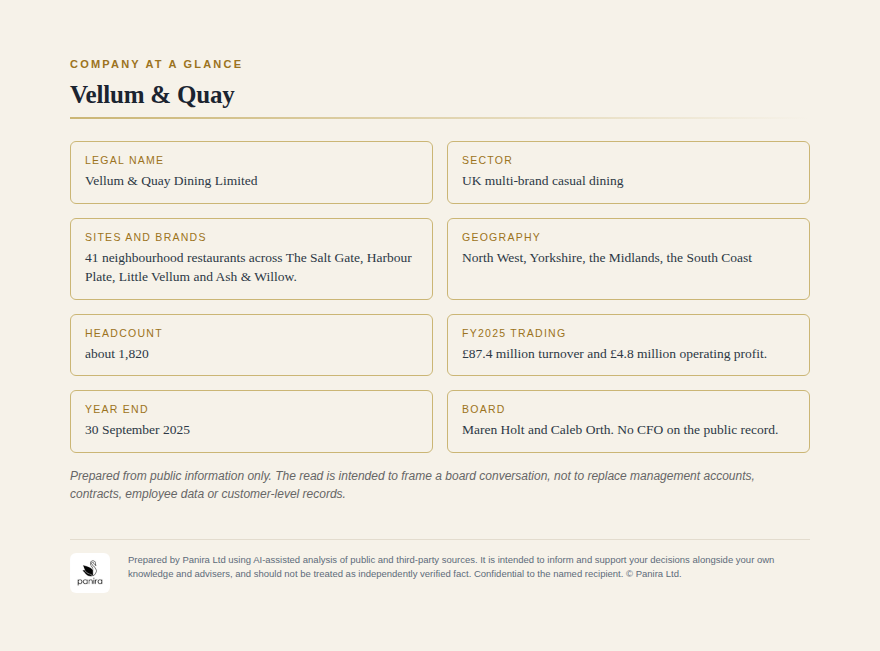
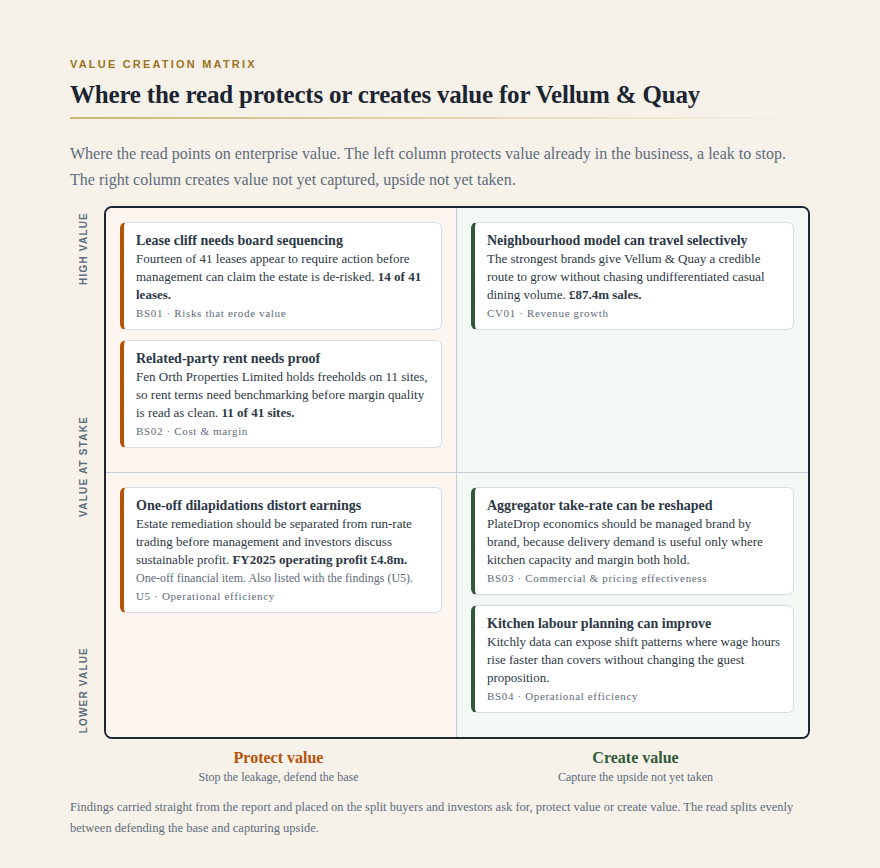
The engine does not just surface findings. It sorts each one into the lever it acts on, revenue growth, commercial effectiveness, cost and margin, operational efficiency, or risk, so you read straight from the finding to the part of the business it touches.
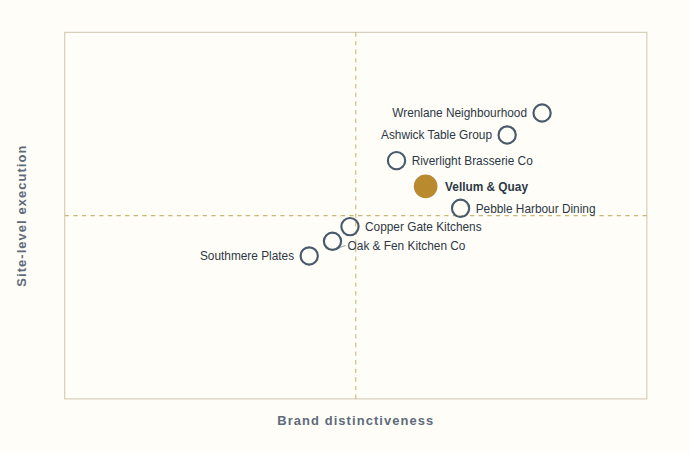
No company exists in isolation, and neither does its read. Every finding is set against the competitive landscape, so a pattern that looks routine on its own is measured against what the market is doing, which is where the real signal often sits.
Which is what makes it usable when you have no access to the inside at all. Every assertion is separated into what the record establishes, what it implies, and what remains a hypothesis, so a reader can weigh the evidence on its own terms rather than take it on trust.
Where there is access, the same engine moves into the Inside-Out phase, and there the value is the opposite: the outside read is corroborated, interrogated and pressure-tested with leadership, until what survives is validated rather than merely inferred.
An adviser runs it before a client meeting, to arrive already knowing what the outside record shows. An acquirer runs it before diligence, to understand a target before anyone inside has shaped the story. An owner runs it before a sale, to see the business the way a buyer will and to fix the gaps first.
For a board, the read can also run continuously, so the picture stays current between meetings rather than sitting in a document that is out of date within a week. Nothing needs installing and nothing needs learning, because the integration sits with the executive team, so the board sees clean output.
Real insight built from what everyone else can already see, showing where performance is leaking and where opportunity is being missed, whether you run fifty people or fifty thousand.
You govern on last quarter's numbers. This gives you a read that stays current between meetings, and independent of management.
An outside view of any target on public information alone, with every finding sorted into the value-creation levers a deal thesis is built on. There is a route built for you, at Deals & Transactions.
See what a read looks like.